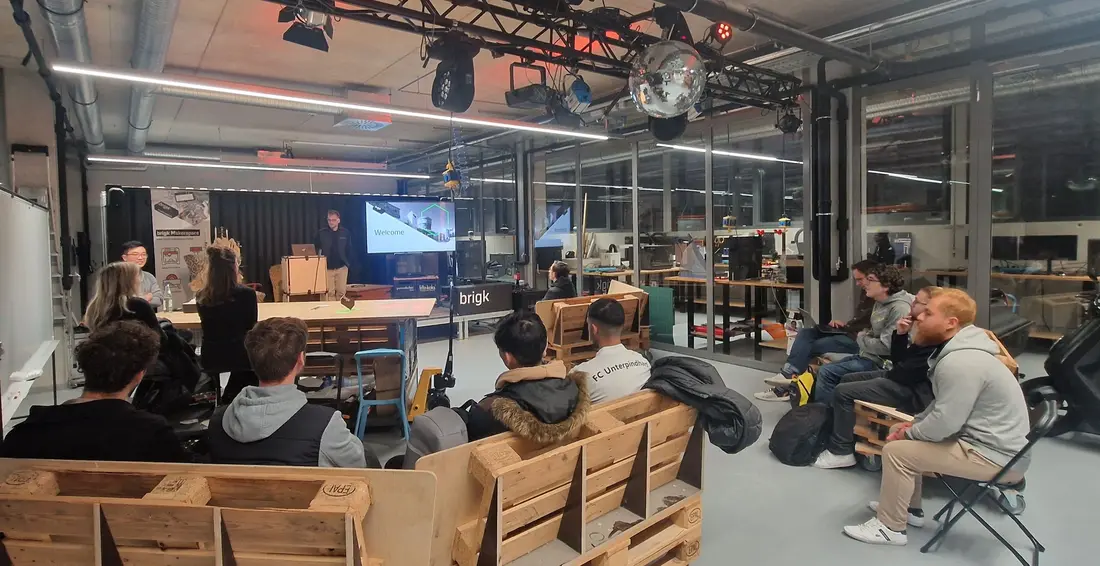
How can student knowledge be made visible and actively integrated into the learning process? The "THI Video Community" project, led by Professor Munir Georges and Professor Ulrich Schlickewei, demonstrates how peer-to-peer learning can be effectively supported in the digital space. Also involved in the project were Professor Sören Gröttrup, Professor Bernhard Axmann, Professor Jörg Clostermann, Professor Hans-Joachim Hof, Professor Sina Huber, Professor Matthias Huber, Professor Stefan Kugele, Professor Richard Membarth, Professor Bernhard Rothbucher, and Professor Torsten Schön.
The project provides students with tools, guidelines, and infrastructure to create their own personalized, practical, and didactically sound teaching videos. These videos are designed to specifically support other students in understanding and deepening learning content.
In addition to the technical infrastructure, the project offers targeted support for video production: A handbook guides students from topic selection through implementation to post-production and provides practical tips for creating effective learning videos. This is supplemented by an internal THI overview of available equipment such as cameras, podcast studios, and green screens. During the current semester, the platform was not only actively used but also further developed – the team is currently working on expanding the content of the guide. New sections on didactic concepts are intended to provide even more targeted support for students in communicating learning objectives clearly, creatively, and methodically soundly.
A systematic evaluation is being prepared to ensure the next stage of development is tailored to the needs of learners. Student feedback will be the central component of this evaluation phase, with the goal of sustainably aligning the platform with learner needs.


![[Translate to English:] Logo Akkreditierungsrat: Systemakkreditiert](/fileadmin/_processed_/2/8/csm_AR-Siegel_Systemakkreditierung_bc4ea3377d.webp)