Doctoral Centre Artificial Intelligence / Computer Science
Are you ready to play an active part in shaping the future with your doctorate in AI or Computer Science?
From autonomous driving and AI-supported medicine to intelligent production processes: at the Doctoral Centre AI/Computer Science, we combine Computer Science, technical systems and human-computer interaction to conduct cutting-edge, application-oriented research. Interdisciplinary, international teams, outstanding researchers and state-of-the-art laboratories create an environment in which innovation flourishes and scientific progress becomes a reality.
Start your doctorate in one of the four research clusters – supervised by professors with a strong research background:
- Artificial Intelligence: Autonomous Driving & Flying, AI Mobility, AI Medicine, AI Production Processes
- Computer Science: Cyber-physical Systems, IT Security, Automation, Sensor Technology
- Human-Machine Interaction: UX, Speech/Text/Image Understanding, Human-Computer Interaction
- Societal Implications: Ethical Aspects, AI Business Models, Technology Management
Get to know your future doctoral colleagues and gain an insight into their areas of research.
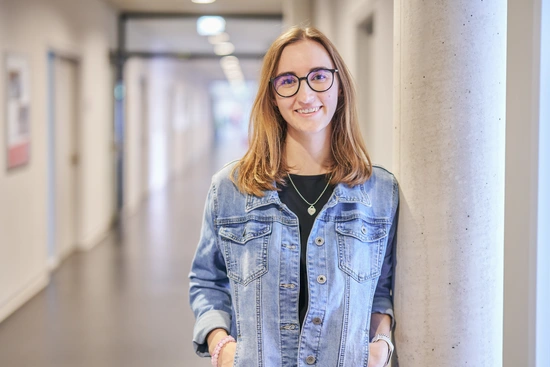
Kristina Dachtler
Doctoral student at the Doctoral Centre AI/Computer Science within the Artificial Intelligence Cluster
“As part of my doctorate, I am conducting research into the targeted development of machine learning models in the field of predictive quality for manufacturing. I appreciate the strong practical focus that THI offers me in this regard – thanks to the close links with industry, I am able to work very closely on real-world problems here. I am in close contact with the professors here; you’re not just one of many. I also really enjoy the sense of community amongst us doctoral students.”
At the Doctoral Centre AI/Computer Science, more than 40 doctoral candidates are currently conducting research on innovative dissertation projects. Two doctoral candidates have already successfully completed their doctorates.
| Name | Topic | Supervisor | Cluster |
|---|---|---|---|
| Philip-Roman Adam | Transferable and Robust Reinforcement Learning with Decision Transformers for Signalised and Unsignalised Transit Priority | Prof. Stefanie Schmidtner & Prof. Alexander Schiendorfer | Artificial Intelligence |
| Muhammad Uzair Akmal | A Collaborative Human–AI Agent Methodology Integrating Large Language Models to Detect and Mitigate Data and Concept Drift in Manufacturing Systems | Prof. Daniel Großmann & Prof. Alexander Schiendorfer | Artificial Intelligence |
| Mert Alagözlü | Dynamic Vehicle Routing for Waste Disposal Logistics using Constraint Programming and Machine Learning | Prof. Alexander Schiendorfer & Prof. Stefanie Schmidtner | Artificial Intelligence |
| Faizan Ali | Hybrid Machine Learning and Ontologies Framework for Industrial Manufacturing | Prof. Jürgen Bock & Prof. Alexander Schiendorfer | Artificial Intelligence |
| Saara Asif | Resolving Class Imbalance in Image Data: Strategies for Effective Mitigation | Prof. Daniel Großmann & Prof. Alexander Schiendorfer | Artificial Intelligence |
| Konstantin Bake | Obstacle Avoidance for Unmanned Aerial Vehicles Using Reinforcement Learning and LiDAR Data | Prof. Torsten Schön & Prof. Christian Seidel | Artificial Intelligence |
| Balahari Vignesh Balu | From Vulnerability Knowledge to Secure Code: A Data-Driven Alignment Strategy for Code-Generation Models | Prof. Munir Georges & Prof. Stefanie Kugele | Artificial Intelligence |
| Dominik Bayerl | Neural network for binary analysis and its application to embedded software security | Prof. Hans-Joachim Hof & Prof. Munir Georges | Artificial Intelligence |
| Julian Blümke | Holistic cybersecurity life cycle of automotive battery management systems: bridging the gap between first and second life | Prof. Hans-Joachim Hof & Prof. Christian Facchi | Computer Science |
| Raviteja Boddu | Multi-modality fusion-based intelligent and coordinated rescue of occupants using large language models and data from the vehicle interior monitoring system | Prof. Alessandro Zimmer & Prof. Munir Georges | Artificial Intelligence |
| Alexander Bönisch | AI-supported optimisation of fuel consumption in the tactical planning of industrial waste transport | Prof. Stefanie Schmidtner & Prof. Alexander Schiendorfer | Artificial Intelligence |
| Vanchha Chandrayan | Cognitive-Aware In-Vehicle Assistance through Multistate Sensing and Reasoning-Enabled Language Models | Prof. Ignazio Alvarez & Prof. Natascha Merat (Institute for Transport Studies, University of Leeds, UK) | Artificial Intelligence |
| Kristina Dachtler | Goal-oriented machine learning methods to meet stakeholder requirements in manufacturing use cases | Prof. Alexander Schiendorfer & Prof. Daniel Großmann | Artificial Intelligence |
| Anderson de Lima Luiz | Integrating Large Language Models into Human-Machine Interaction Systems for Enhanced Automotive Applications: A Multidisciplinary Approach | Prof. Alessandro Zimmer & Prof. Munir Georges | Artificial Intelligence |
| Alexander Fertig | AI-based Detection of Anomalies in Sensor Data for the Validation of Automated Vehicles | Prof. Michael Botsch & Prof. Torsten Schön | Artificial Intelligence |
| Kai Hartung | Secure Code Generation with Unsupervised Training (Title: Abstract) | Prof. Munir Georges & Prof. Sören Gröttrup | Artificial Intelligence |
| Patrizia Heinl | Artificial Intelligence-Related Security of Safety-Critical Systems | Prof. Hans-Joachim Hof & Prof. Christian Facchi | Computer Science |
| Alexander Horn | Prediction of bus journey and dwell times using deep learning | Prof. Stefanie Schmidtner & Prof. Michael Botsch | Artificial Intelligence |
| Sibel Hyusmen | AI system for implementing assistance systems in production planning | Prof. Jürgen Bock & Prof. Daniel Großmann | Artificial Intelligence |
| Chidvilas Karpenahalli Ramakrishna | Uncertainty-Aware Criticality in Reinforcement Learning: Enhancing Robustness, Safety and Trust in Autonomous Driving | Prof. Christian Facchi & Prof. Torsten Schön | Artificial Intelligence |
| Felix Kawala | GPU Dataflow-Oriented Scheduling and Programming | Prof. Richard Membarth & Prof. Munir Georges | Computer Science |
| Daniel Manfred Georg Kriegl | Scalability and Fault Tolerance in Distributed Tournament Platforms for Coding Games: Solutions, Challenges and Impact | Prof. Torsten Schön & Prof. Christian Facchi | Computer Science |
| Claudius Laves | Leveraging physical and behavioural properties to enhance the cybersecurity of automotive batteries | Prof. Hans-Joachim Hof & Prof. Hans-Georg Schweiger | Computer Science |
| Lukas Stefan Lodes | An Uncertainty-Aware Software Architecture for Machine Learning | Prof. Alexander Schiendorfer & Prof. Daniel Großmann | Artificial Intelligence |
| Joed Lopes da Silva | Multimodal Sensing and Multi-Task Learning for Advanced Occupant Monitoring Systems | Prof. Alessandro Zimmer & Prof. Munir Georges | Artificial Intelligence |
| Jakob Löw | Automated exploration of high-level protocols using charging communication as an example | Prof. Hans-Joachim Hof & Prof. Christian Facchi | Computer Science |
| Selvine George Mathias | Effective anomaly detection and localisation techniques in high-pressure die casting through structure-borne sound analysis | Prof. Daniel Großmann & Prof. Alexander Schiendorfer | Artificial Intelligence |
| Adithya Mohan | A Path Towards Robust Embodied AI for Autonomous Systems: Leveraging DRL and Adversarial Defences | Prof. Torsten Schön & Prof. Michael Botsch | Artificial Intelligence |
| Laura Neumeier (née Dietl) | Enhancing Reinforcement Learning via Neurosymbolic AI in the Context of Vulnerable Road User Trajectory Prediction | Prof. Christian Facchi & Prof. Sören Gröttrup | Artificial Intelligence |
| Fazli Faruk Okumus | Risk-Aware Mitigation Strategy Synthesis and Fault Diagnosis for Autonomous Vehicles | Prof. Stefan Kugele & Prof. Christian Facchi | Computer Science |
| Sebastian-Sven Olzem | Reinforcement Learning on Airborne Multi-Agent System Sensor-Effector Formations for Task Optimisation | Prof. Gerhard Elsbacher & Prof. Torsten Schön | Artificial Intelligence |
| Alice Rollwagen | Enhancing Human-Automated System Communication with Adaptive Interfaces | Prof. Andreas Riener & Prof. Alessandro Zimmer | Human-Machine Interaction |
| Emely Rosbach | From Black Box to Blind Spot: Exploring Cognitive Biases in AI-Assisted Medical Decision-Making and the Factors That Shape Them | Prof. Andreas Riener & Prof. Marc Aubreville | Human-Machine Interaction |
| Carla Roth | Event-based Vision in Autonomous Driving: Simulation, Fusion, and Real-Time Processing | Prof. Torsten Schön & Prof. Martin Ebert | Artificial Intelligence |
| Julia Ruttmann | Learnable Fairness and Explainability in Social Combinatorial Optimisation | Prof. Alexander Schiendorfer & Prof. Stefanie Schmidtner | Artificial Intelligence |
| Thomas Schmidt | Preference-Guided Multi-Objective Deep Reinforcement Learning in Industrial Applications | Prof. Alexander Schiendorfer & Prof. Stefanie Schmidtner | Artificial Intelligence |
| Gokul Srinivasagan | Efficient multilingual language modelling for devices with limited resources | Prof. Munir Georges & Prof. Richard Membarth | Artificial Intelligence |
| Pauline Steffel | Reinforcement learning for autonomous mobile robots with integrated manipulators in manufacturing applications | Prof. Alexander Schiendorfer & Prof. Jürgen Bock | Artificial Intelligence |
| Egor Streck | High-precision radar-based localisation and classification of vulnerable road users (VRUs) in the infrastructure, taking into account road surface weather conditions, using machine learning and the micro-Doppler effect | Prof. Gordon Elger & Prof. Christian Endisch | Artificial Intelligence |
| Venkatesh Thirugnana Sambandham | Fairness evaluation and bias mitigation in text-to-image generators | Prof. Torsten Schön & Prof. Matthias Uhl | Artificial Intelligence |
| Emre Tsaliskan | Camera-based end-to-end network for position and orientation estimation | Prof. Torsten Schön & Prof. Christian Seidel | Artificial Intelligence |
| Vishwa Vimukthi Vasu Ashoka | Cross-Layer Anomaly Detection for Securing EV Charging Communication | Prof. Hans-Joachim Hof & Prof. Thomas Hutzelmann | Artificial Intelligence |
| Xujun Xie | Enhancing Autonomous Driving in Motorway Work Zone Environments Through Generalised Environmental Comprehension | Prof. Torsten Schön & Prof. Michael Botsch | Artificial Intelligence |
| Wenguang Xu | Towards Runtime- and Energy-Efficient Trajectory Planning Through Cross-Layer Optimisation | Prof. Richard Membarth & Prof. Michael Botsch | Computer Science |
Get an overview of the dissertations that have already been completed and discover the wide range of topics covered by the research projects at the AI/Computer Science Doctoral School.
| Name | Year | Dissertation topic | Primary supervisor | Second supervisor |
|---|---|---|---|---|
| Dr Simon Knollmeyer | 2026 | AI-supported knowledge management in production planning | Prof. Dr Daniel Großmann | Prof. Dr. Jürgen Bock |
| Dr Bilal Mühenad | 2025 | Development of a reflection-reducing imaging method with homogeneous illumination and convolutional neural networks for wear detection and classification of complex, reflective cutting tools | Prof. Dr Daniel Großmann | Prof. Dr Jürgen Bock |
| Dr Leonid Koval | 2025 | Methodology for Evaluating and Optimising Machine Learning Applications in Industrial Production | Prof. Dr Daniel Großmann | Prof. Dr Alexander Schiendorfer |
Professors
At the AI/Computer Science Doctoral School, 24 experienced professors with proven research strengths and academic expertise will guide you through your doctorate. Get to know your potential supervisors, who will support you both academically and personally throughout your doctorate.

Computer Vision, Image Generation, Medical AI
marc.aubreville@hs-flensburg.de



AI-Applications in innovative Production and Logistics Systems
Juergen.Bock@thi.de


Technical Computer Science and Automated Driving
Martin.Ebert@thi.de


AI-supported Aeronautical Engineering and Product Development
Gerhard.Elsbacher@thi.de




Biomechatronics and Sensor Data Analysis
Marion.Menzel@thi.de

Model-based Systems Engineering und Software Engineering
Stefan.Kugele@thi.de

Human-Machine Interface and Virtual Reality
Andreas.Riener@thi.de

AI-based Optimization in Automotive Production
Alexander.Schiendorfer@thi.de

Sustainable Urban Development and Artificial Intelligence
Stefanie.Schmidtner@thi.de



Gesellschaftliche Implikationen und Ethische Aspekte der Künstlichen Intelligenz

Pursuing a doctorate at the Doctoral Centre AI/CS
The AI/Computer Science Doctoral Centre offers you the ideal conditions to advance your research and undertake a quality-assured doctoral programme.
Doctoral degrees
The AI/Computer Science Doctoral Centre awards the academic degrees “Dr. rer. nat.” and “Dr. phil.”.
What to expect
- Access to state-of-the-art laboratories, test facilities and technical infrastructure
- Personalised support from experienced professors with a strong focus on practical applications
- Collaboration with companies and international research partners on real-world problems
- Close networking amongst THI PhD students, with regular meetings and events
A wide range of professional development opportunities
Applying to the Doctoral Centre
Dr Monika Kolpatzik, Managing Director of the Doctoral School, will provide you with personalised advice both before and during the application process.Contact
Discover your research environment
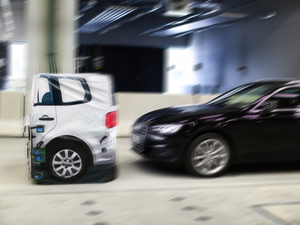
Your PhD project is closely linked to the research institutes at THI. Here, you will conduct interdisciplinary, practice-oriented and scientifically sound research into topics of the future.


Contact person
Management Team
- Prof. Dr Andreas Riener: Academic Director of the Doctoral Centre for AI/Computer Science
- Prof. Dr Alexander Schiendorfer: Deputy Academic Director of the Doctoral Centre AI/Computer Science
- Prof. Christian Facchi:Academic Director of the Doctoral School
- Dr Monika Kolpatzik:Managing Director of the Doctoral School
Doctoral Student Representative
- Julian Blümke: Doctoral Centre for AI/Computer Science
![[Translate to English:] Logo Akkreditierungsrat: Systemakkreditiert](/fileadmin/_processed_/2/8/csm_AR-Siegel_Systemakkreditierung_bc4ea3377d.webp)