The idea behind it is simple: the system generates electricity and heat at the same time. While the electricity can be used directly in the household, the heat generated is used for heating or hot water. In this way, the energy used is utilised particularly well. In technical terms, THI relies on a new type of motor known as a free-piston motor. Unlike conventional motors, there is only one moving component here. This allows the system to work more efficiently and adapt itself to different operating conditions. "We want to generate energy exactly where it is needed - and as efficiently as possible," says project manager Professor Karl Huber. "This saves resources, reduces losses and can make the energy supply more stable overall." In order to develop the system, the researchers have set up their own test bench. There they are investigating how well the interaction between combustion, movement in the engine and power generation works. Initial results show that the system runs stably and can be flexibly adapted to different requirements. In the long term, the mini power plant is intended to improve existing solutions, particularly in terms of efficiency, costs and maintenance. It can also be operated with different energy sources - such as ethanol, methanol, methane or, in future, hydrogen. The project is being realised together with industrial partners. THI is playing a central role in the development of the engine and the testing of the overall system. |
Rethinking energy for the home: Technische Hochschule Ingolstadt (THI) develops particularly efficient mini power plants
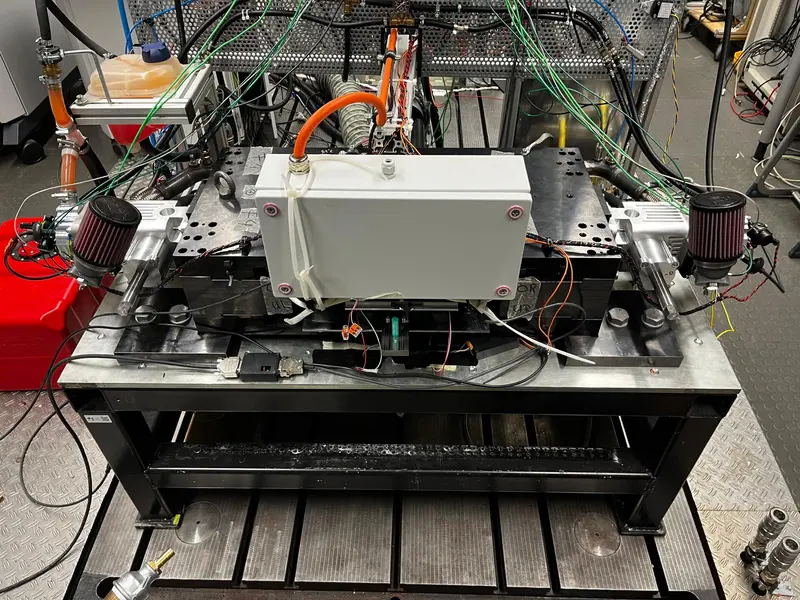
One of the project’s key developments (Photo: THI).
![[Translate to English:] Logo Akkreditierungsrat: Systemakkreditiert](/fileadmin/_processed_/2/8/csm_AR-Siegel_Systemakkreditierung_bc4ea3377d.webp)