The conference, organised by the city of Ingolstadt and opened by Lord Mayor Dr Michael Kern, brought together experts from the fields of science, care, and administration. In this context, an interdisciplinary THI team presented the "Kaiser Karl III" residential bed. It was developed by Technical Design and Engineering and Business students under the direction of Professor Bernhard Rothbucher. The starting point was the life situation of an elderly man from Upper Austria who wants to live independently in his home for as long as possible. The result was a piece of furniture that combines care, retreat, and cosiness. The bed is mobile, can be used in a variety of ways, and blends unobtrusively into existing living spaces. At the same time, it fulfils key requirements in everyday care. It can be used both in the home environment and in emergency accommodation. The student team was recognised for this concept by the THI Sponsoring Association and was one of the finalists for the Social Impact Award Germany 2025. Bernhard Rothbucher emphasised that design bears responsibility and can have a tangible impact on the quality of life. His approach combines technical implementation, observation, and an understanding of the needs of older people. THI also presented its further education programmes in the healthcare sector. The part-time Bachelor programme for professionals in Management in Health Professions, led by Professor Alfred Quenzler, qualifies nursing staff for tasks in leadership, quality, and process management. The academic study programme is also open to those without a high school diploma. The THI's contribution made it clear how teaching, research, and social issues interact and how design can contribute to the further development of care in an everyday and people-oriented way. |
"Emperor Charles III" provides impetus at Ingolstadt care conference
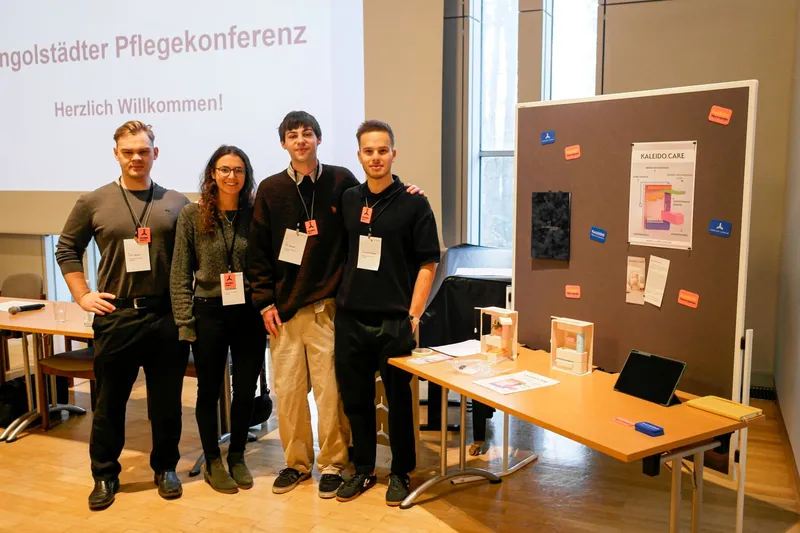
Young THI team, major social impact: the Kaiser Karl III care bed impressed at the Ingolstädter Pflegekonferenz (Photo: THI).
![[Translate to English:] Logo Akkreditierungsrat: Systemakkreditiert](/fileadmin/_processed_/2/8/csm_AR-Siegel_Systemakkreditierung_bc4ea3377d.webp)